Peptidelogy refrains from offering medical advice or user protocols in cases where human data are scarce or specific to certain indications. A photograph taken at week 0 allows for a genuine comparison after a duration of 6 weeks. Available in powdered form, KLOW peptide blends require mixing with bacteriostatic water (BAC water) prior to usage.
All PSPeptides products are sold exclusively for laboratory and research use. If you have questions before ordering (our support team is available seven days a week by email), phone, or text. A batch-specific COA documenting these results is published on this page and included every time you buy KLOW blend, a more rigorous standard than testing only the final blended product. Avoid repeated freeze-thaw cycles and protect from light and humidity at all times.
Dosage protocols for KLOW ProtocolGoalDoseFrequencyRouteCommon Research Protocol3.2mg total , 2mg GHK-Cu, 400mcg each TB500/KPV/BPC-157,Once dailySubQStarter/Titration Protocol2mg total (1.25mg GHK-Cu, 250mcg each TB500/KPV/BPC-157)Once dailySubQ The protocols below are vendor and community-derived, not from clinical or animal research, and no optimization studies for ratios or total dose exist. Its safety, optimal ratio, and dosing have not been studied, and products sold as TB-500 are a synthetic fragment of thymosin beta-4 rather than the full-length protein most thymosin beta-4 research used.
However (for significant structural healing and tissue repair), a cycle of 4-8 weeks is typically required. Some users report noticing a reduction in pain and inflammation within the first few days to a week. After reconstitution an introduction to MOTS-c peptide , store the solution at 2–8°C and use within 14 days. To manage any potential side effects from other compounds in a stack, users often keep Aromasin on hand as an effective aromatase inhibitor. KLOW is incredibly versatile and can be used as a standalone recovery protocol or stacked with other compounds to enhance overall performance and results. By entering, you confirm you are at least 18 years old and agree to view educational content responsibly.
A note on results timelines
Only a net content test on the finished vial catches that. BPC-157 is considered non-toxic even at relatively high doses in animal studies. GHK-Cu is considered non-toxic and is used in cosmetic products safely. This is the part of the article that didn’t exist when I first wrote it — and it’s the biggest thing to happen to these four peptides in years. I use that 10-unit draw daily for active protocols, then taper to every other day once improvement plateaus.

The 28-Day Reconstitution Window
This guide provides evidence-based insights on the KLOW stack , GHK-Cu, BPC-157, TB-500, and KPV,, detailing dosing protocols, the functions of each peptide, and existing research on recovery, skin, and inflammation. Healing from injuries is often faster , days to 2 weeks. After 4–6 weeks of treatment followed by 2–4 weeks of rest, begin with half the dosage for the first 14 days since scars take more time for collagen remodeling to occur. Community-reported loading involves 5 times per week at 10 units, while maintenance is reported as 3 times per week at 5 units for an 80 mg vial, lasting approximately 4 weeks and around 13 weeks , exceeding 28 days,.
Typically (the cycle consists of 4–6 weeks on), succeeded by 2–4 weeks off, primarily to facilitate copper clearance from the GHK-Cu component during the break. The blend has not been formally evaluated in a controlled study. Occasionally (a subtle blue-green discoloration at the injection site has been reported), resulting from the copper in GHK-Cu; it is purely cosmetic.
Most protocols run 4 to 12 weeks depending on the severity of injury or condition. That’s $98.96 for the exact contents of one KLOW 80 vial. In KLOW it’s working alongside BPC-157 and GHK-Cu — so the blood supply, the scaffolding, and the stabilization all show up at the same time. Therefore — a traditional PCT with compounds like Clomid or Nolvadex is not necessary after a cycle of KLOW. The timeline can vary based on the severity of the injury (your overall health), dosage, and consistency of use.
While the mechanisms are established individually, their combined effect remains untested. All other benefits are based on research conducted with animals or cell cultures, and no study has examined the blend itself. The presence of four peptides in a blend complicates matters due to the potential for four discrepancies. Important practical variables concerning unregulated research chemicals include purity (the actual content versus what is labeled), endotoxin levels, and the accuracy of the stated ratio in the vial.

Sterile, non-pyrogenic, exactly 0.9% benzyl alcohol, with a COA on every batch. What you are paying for encompasses the dose ratio (the convenience of utilizing one vial), and the simultaneous timing that allows inflammation control, scaffolding rebuild, and tissue repair to occur concurrently rather than sequentially. The KLOW peptide benefits listed below represent consistent reports from individuals following protocols of 8 to 12 weeks, arranged by the order of observed changes. BPC-157 falls under WADA category S0 (non-approved substances), while thymosin beta-4 derivatives like TB-500 are categorized under S2 as prohibited. KLOW is a fixed-ratio blend, meaning one volume determines all four doses collectively, and they cannot be individually modified. No, and this distinction is significant when evaluating different products.
Rx Peps Direct prescribes; the pharmacy compounds and dispenses; Eagle tests every batch. KPV in peopleWe found no published study of KPV in people. No study has measured side effects of this blend (or of BPC-157 injected under the skin), in people, so this page gives no rates.
The KLOW blend is discussed online as a combined recovery and inflammation research protocol, but the available literature evaluates its ingredients separately. Compared with three-component products, KLOW adds KPV as a fourth peptide alongside GHK-Cu, BPC-157 and TB-500. Every syringe marking therefore changes all four component amounts at the same time.
Best Time to Take
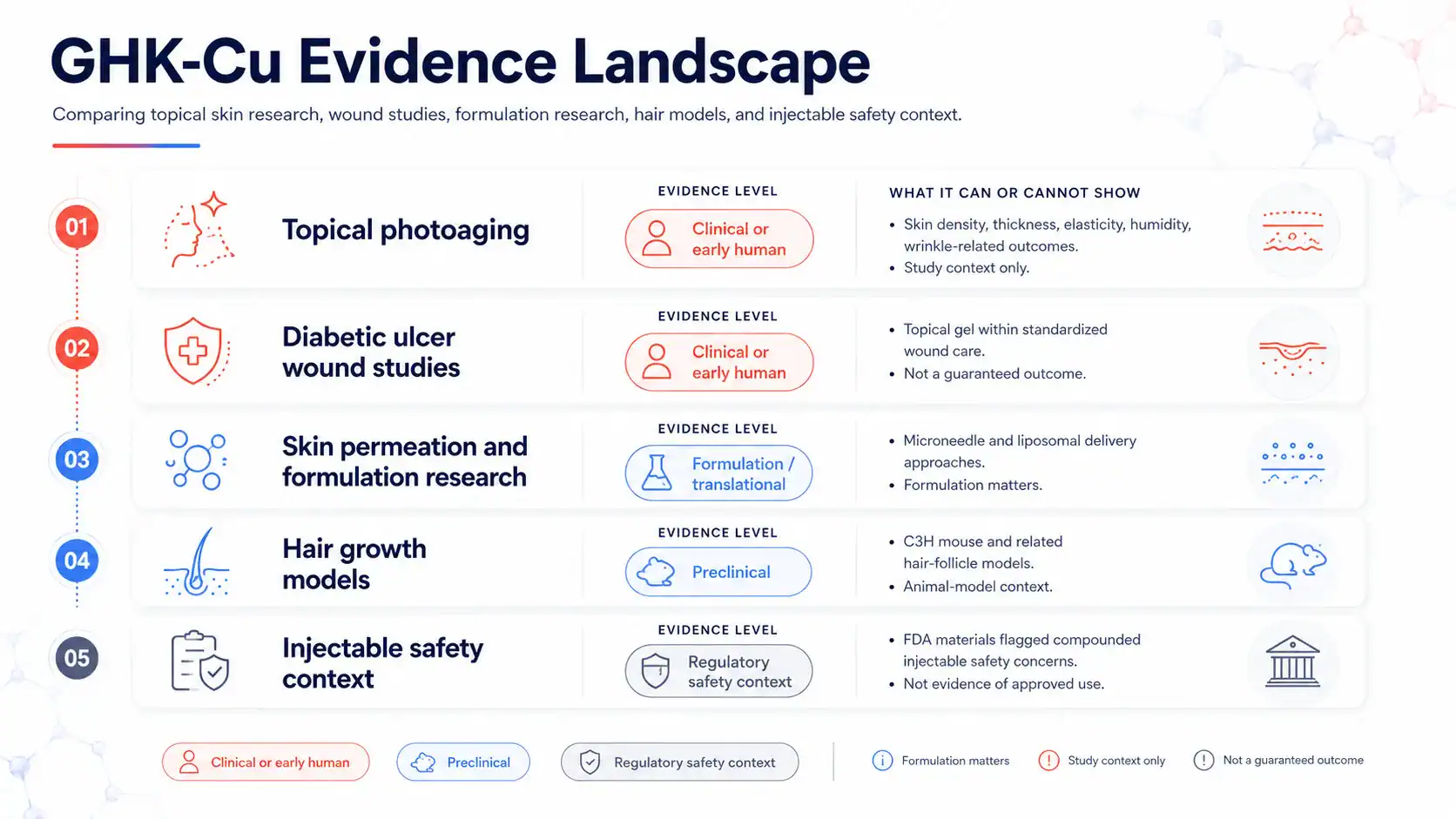
BPC-157 and TB-500 tissue remodeling continues for weeks post-cycle , animal data,. Tissue remodeling plateau continues; no human data for this time window. Maximum GHK-Cu-mediated collagen and elastin synthesis , based on gene expression timelines in Pickart data,. KPV NF-kB suppression reduces measurable inflammatory markers in IBD animal models by 2–3 weeks. GHK-Cu activates fibroblast signaling within hours; BPC-157 and KPV reach relevant tissue concentrations within days (animal model PK data only).
Short cycles , 4 weeks, show some changes but not the full picture. Existing injuries (post-workout soreness), wounds , users often notice healing speed increasing within days. Visible density improvements don’t really show up until week 12-16. Some users notice increased shedding in weeks 2-4.